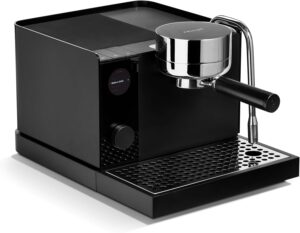
Choosing between a commercial and a home espresso machine involves more than just a simple price check.
- Size and Weight: Commercial machines are much larger and heavier; home models are compact.
- Durability and Materials: Commercial machines are built with high-grade, durable, lasting materials like steel.
- Boiler System: Commercial machines have multiple large boilers; home models have one small.
- Shot Volume and Speed: Commercial machines produce many shots quickly; home machines have slower output.

- Price: Commercial machines are significantly more expensive, costing thousands of dollars.
- Ease of Use: Commercial machines require training; home models are typically simpler to operate.
- Maintenance: Commercial machines require professional servicing; home machines are easier to clean.
- Plumbing: Commercial units are often plumbed in; home models use a water reservoir.
- Customization: Commercial machines offer more control and customization for skilled users.
For Commercial Machines, leading brands include:
La Marzocco: Renowned for durability, consistency, and iconic design.
Synesso: Known for advanced technology and precise temperature control.
Slayer: Famous for innovative flow control and stunning aesthetics.
Simonelli (Nuova Simonelli / Victoria Arduino): Popular for reliability and advanced features.
Faema: A classic Italian brand with a long history of quality.

La Marzocco Commercial Machine pic by counter culture coffee
For Home Machines, leading brands include:
Breville: Popular for integrated grinders and user-friendly features.
De’Longhi: Offers a wide range from entry-level to semi-automatic.
Gaggia: A classic brand with a focus on traditional home espresso.
Rancilio: Known for prosumer machines that offer commercial-level quality.
ECM / Profitec: High-end prosumer brands offering excellent build quality.
Flair Espresso / Wacaco: Leading brands in manual, portable espresso makers.

Breville Oracle, the most popular home coffee machines brand today.